
 For the dismissal at the end of our worship services, we hear the words, “Go in peace. Share God’s love.” And the congregation’s response is, “Thanks be to God.”
0 Comments
 Being thankful seems such an important thing that we have a national holiday dedicated to gratitude! For many, it involves gastronomic excess, time off from work, and football. This holiday is our expression of something humans have been doing since the pre-winter harvest and hunt took place for the very first time, I imagine. We have our American version of the feast, but it is a universal impulse to give thanks for the bounty we humans receive regardless of clan, nationality, time, or place. “It is right to give our thanks and praise,” as our worship proclaims.
 Revelation is a book of encouragement. John was writing to persecuted Christians under Roman rule - under the oppressive political powers of the day. John writes in code, in a way that the original audience would know exactly what he was talking about, but that the political powers would wonder, and they wouldn’t quite understand it.
 The leaves have fallen with more intensity this past week. The Autumn Blaze Maple in my front yard has given up much of its colorful bounty. Soon, there will be one lone leaf left, defiantly hanging on against the frost and approach of dormancy. Then we will wait through the winter for buds to appear, for new growth to happen. It is not a sure thing.
Based on all our research and surveys, it's evident that church attendance has declined significantly. Some denominations are down more than others. The fact is that every denomination is losing members.
 On Paul’s missionary trip through Macedonia, he encountered people who were suffering a “severe ordeal of affliction,” and living in “extreme poverty.” (II Corinthians 8:2) If anyone needed help, it was these folks. Yet, Paul tells us, that when they found out about the suffering and famine in Jerusalem and the offering Paul was taking to meet those needs, listen to what they did: “… they voluntarily gave according to their means and even beyond their means, begging us earnestly for the favor of partnering in this ministry to the saints…” (2 Corinthians 8:3-4).
 It’s often said that “comparison is the thief of joy,” but why is that true?
The act of comparison takes our eyes off God and places them on ourselves and the people we’re comparing ourselves to. When we most need to see and understand the love of God, to begin “to grasp how wide and long and high and deep is the love of Christ” (Ephesians 3:18), we avert our gaze. When keeping our eyes fixed on God would reveal the goodness and mercy of God, we focus elsewhere. And that lack of focus on God is devastating because joy comes from God. 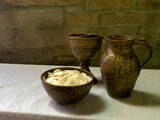 In this world where it can be hard to muster any hope; where the sorrows and suffering of the world pile up, walling us off from any possibility of a joyous future, I cling to a simple meal of bread and wine. It is at the Lord’s Table that I find the grace to carry on.
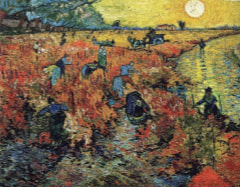 In the Western world we have a dominant worldview. An integral part of our dominant world view is capitalism, which is based on quid pro quo, reward and punishment, and justice as retribution. If I want X number of widgets, I will need to provide Y amount of payment. We are unaware of how this fundamental worldview affects our relationships, our basic self-image, and actions. Phrases like “I deserve”; “You owe me”; “I will be generous if it helps me, too” seem to dominate our conversations. It also gets built into faulty foundation for our relationship with God.
 In the fourth chapter of Genesis, Cain kills his brother, Abel. Murder and violence enter the human story. God finds Cain. “Then the LORD said to Cain, “Where is your brother Abel?” He said, “I do not know; am I my brother’s keeper?” (Genesis 4:9) Am I my brother’s, my sister’s, my neighbor’s keeper? It is a rhetorical question, not an invitation to debate from scripture’s perspective. The answer is a resounding, “YES!”
|

Categories
All
Archives
April 2024
|
 RSS Feed